

Read the full story

I was listening to Fin vs. History the other day, an episode on Jack the Ripper, and in amongst the usual shenanigans they raised something I'd never heard of. The Great Stink of 1858. Bit of a history lesson incoming, stick with me.
In the 1850s, the dominant medical theory was miasma: disease came from bad air, from the smell of decay. So when sanitation reformer Edwin Chadwick set out to fix London's filth problem, he flushed the contents of the city's cesspits into the sewers, which drained into the Thames. He thought he was getting the miasma out of homes. What he was actually doing was poisoning London's drinking water. Cholera got dramatically worse.
When John Snow proved cholera was waterborne in 1854, the medical establishment dismissed him. It took an uncharacteristically hot summer four years later, when the smell from the Thames became so unbearable that Parliament couldn't sit in their own building, to force any action. They commissioned the engineer Joseph Bazalgette, not because they understood what was killing people, but because they wanted the smell to stop. His sewers diverted waste downstream, and London accidentally got clean drinking water as a side effect. They built the right thing for the wrong reason.
The internet feels like the 1850s right now.
Most marketers reaching for AI aren't doing it because they think slop is good. They're doing it because they think it solves a real problem: not enough output, not enough time, content calendars that won't fill themselves. Like Chadwick, they've identified a genuine issue and reached for a solution that creates a worse one underneath. The visible problem is what feeds that smell. The invisible problem is what AI is quietly doing to the way businesses think.
The platforms are actually fighting back
You'd be forgiven for thinking the platforms will sit on their hands. They aren't. YouTube has started demonetising mass-produced content. LinkedIn has gone harder than most people give it credit for.
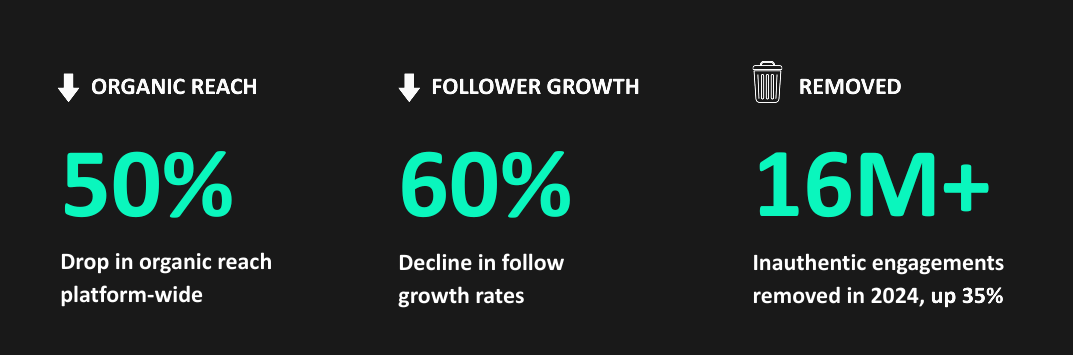
LinkedIn's detection model now flags engagement pod behaviour, downweights generic "great post!" comments, and actively penalises engagement-bait posts. Which, oops, may explain why my recent run of taking the piss out of engagement-bait hasn't exactly gone viral.
So why does it still feel like a sewer in there?
A few reasons. Pods coordinate off-platform, which makes them harder to detect. The volume of AI content is enormous. And plenty of slop creators built genuine followings before the crackdown started. Their AI posts still get real engagement from real people because the audience trusts the name on the post, which means the algorithm reads it as legitimate.
But the more interesting story is what LinkedIn now actively rewards. Profile-content alignment, where your history points coherently to a single area of expertise. Comment depth, where substantive replies that show domain knowledge get weighted far more heavily than likes. Dwell time, how long people actually read your post after the "see more" click. And diverse, genuine engagement from people across different industries, rather than the same twenty pod members.
Every one of those is harder to fake at scale with AI. The slop arms race has a different ending than most people are betting on.
It isn't the team that scales AI content best. It's the people who actually have something to say, in a way only they could say it.
Where I think AI is doing the most damage to businesses isn't in the feed at all.
The bigger problem is in-house
Businesses are pulling marketing work in-house at pace, on the promise that AI will replace what agencies, freelancers, and outside specialists used to do. Strategy, copy, creative, research, all of it absorbed into internal teams armed with the same tools as everyone else. The cost case looks unbeatable on a spreadsheet. The thing that disappears is harder to see, which is exactly why it disappears.
The whole point of having outside help was friction. Different clients, different industries, different brains arguing for things you wouldn't have considered. Replace that friction with an LLM trained on the statistical average of all marketing ever written, and the output regresses to the mean. Mathematically, it has to.
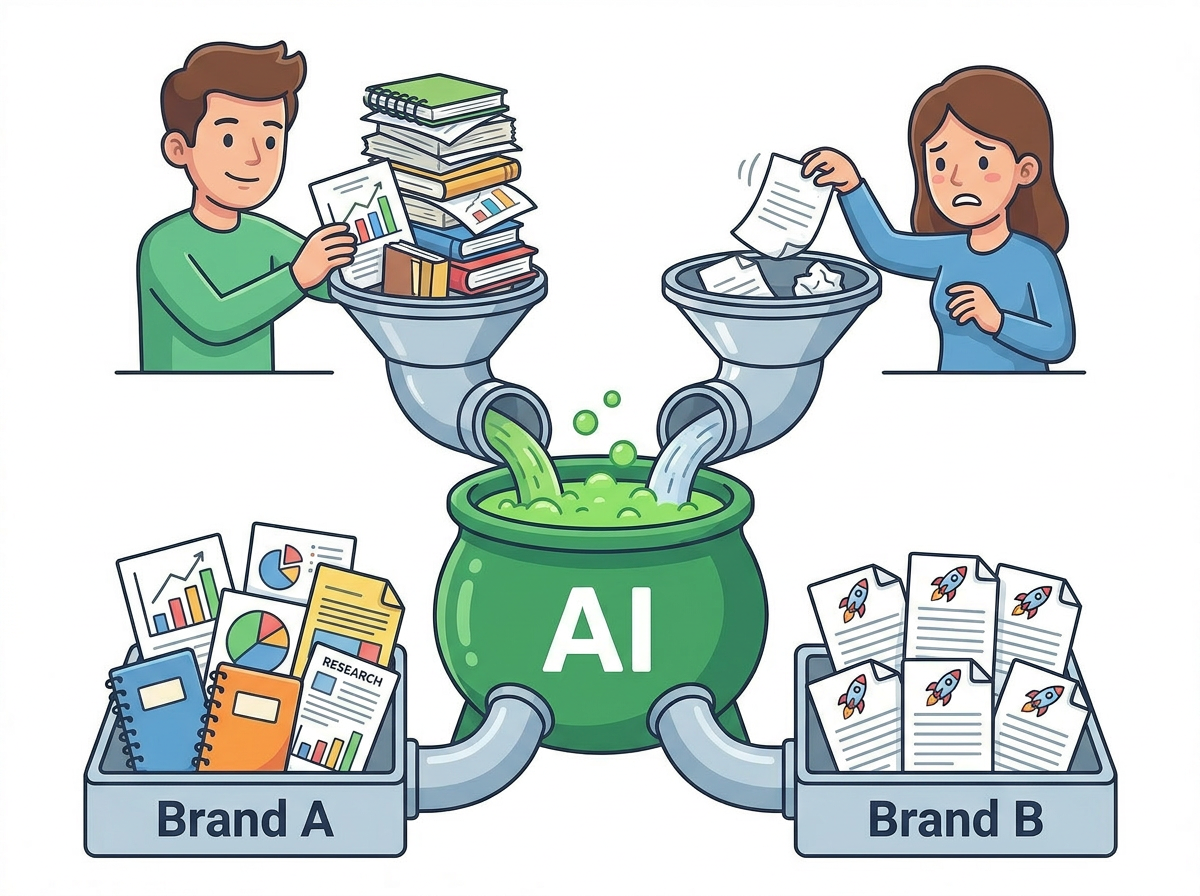
Even if your prompts are different from the next business's, if they're built on stale internal insights and not much new thinking, you're leaning more on what the AI was trained on than on anything genuinely yours. Same training data underneath. Brand voice spray-painted on top. Everyone arrives at similar answers and convinces themselves it's strategy.
This is the Chadwick problem in B2B form. Companies think they're solving the cost problem. They're creating an originality problem they can't see yet. The smell will come. It always does.
Where this leaves you
The platforms will keep tightening their algorithms. The in-house teams will keep churning out content that looks fine on the surface but reads like everyone else's underneath. The two trends are heading straight at each other, and the people in the middle haven't realised yet.
Don't get dragged into the noise. There'll be another "I automated my socials and grew my impressions by 10,000%" post in your feed tomorrow. Being noisy doesn't mean it's good, and increasingly, the algorithm agrees.
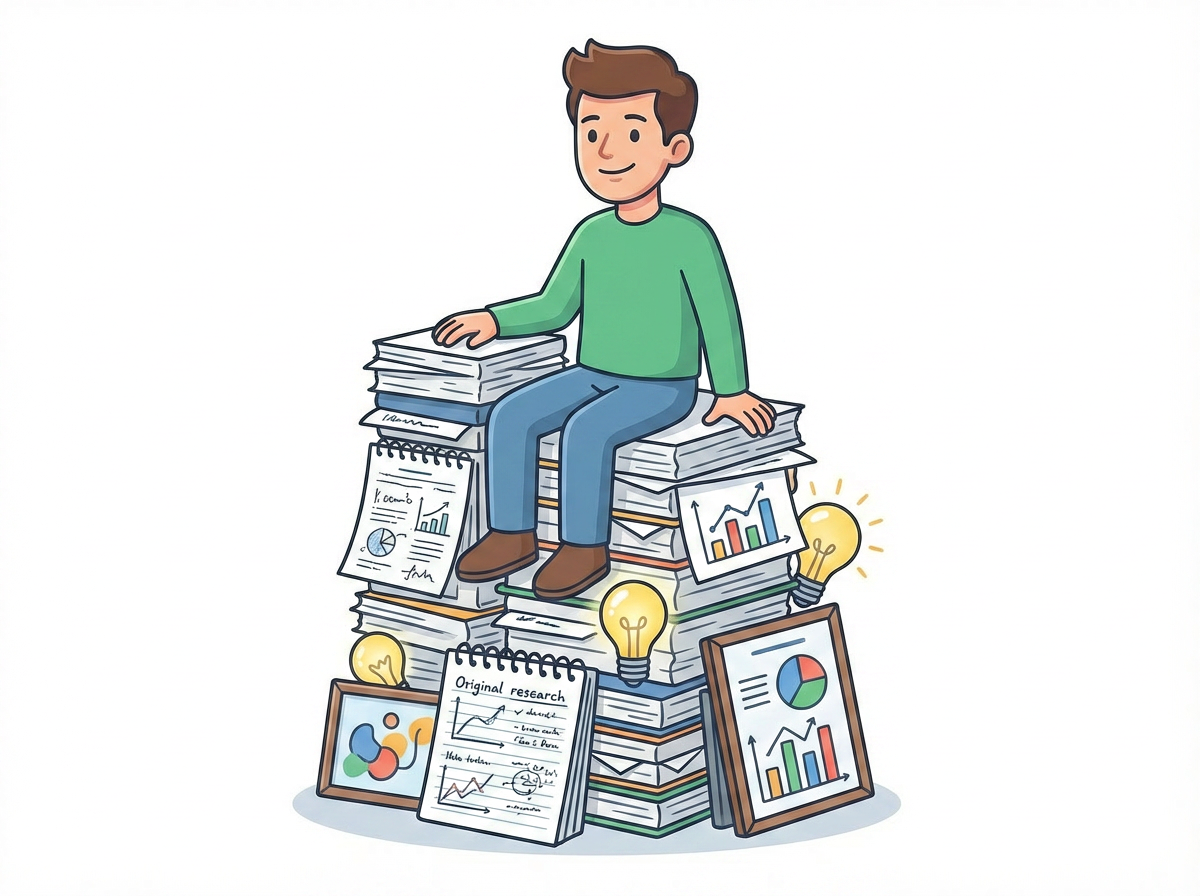
The people who come out of the next two years well are sharpening the things AI can't fake at scale. Your work, your data, your insights, your IP. If it's good and it's genuinely yours, it separates you from the crowd drawing from the same melting pot.
The work is the moat.